
Certified Pre-Owned Vehicles: Nissan CPO Guide for 2026
You’re in a Queens lot with a Nissan that already has miles on it, and the window card says certified. A similar used car nearby costs less. You want fewer surprises, but you don’t want to pay for a badge that the paperwork doesn’t back up.
Certified pre-owned vehicles are still used cars. Someone already owned them. Certification is the manufacturer’s extra gate: the car has to qualify, pass an inspection, and leave with a limited warranty and roadside help. The pages below walk that gate in order, with Nissan eligibility rules and fuel numbers most shopping guides skip.
Table of Contents
- What Certified Pre-Owned Vehicles Are and How They Compare
- Which Vehicles Qualify for Nissan CPO
- How the Nissan Multi-Point Inspection Works
- What Certification Cannot Promise
- Warranty and Roadside Coverage Worth Checking
- Is the CPO Price Premium Worth Paying
- Gas Efficiency Across Nissan CPO Models
- Buy a Nissan CPO at Heights Nissan
What Certified Pre-Owned Vehicles Are and How They Compare
A certified pre-owned car has already been owned and driven. Pre-owned describes that history; certified means the vehicle has met a manufacturer’s eligibility rules and inspection standards. The program adds a limited manufacturer-backed warranty and roadside assistance, making certification an extra layer of screening rather than a promise that the car is new or problem-free.
The market figures show why certified cars may be harder to find. Cox Automotive reported 2,546,155 certified pre-owned sales in the United States in 2024, down from 2,641,622 in 2023, a decrease of about 3.6%. Cox also reported that average non-luxury brand CPO inventory fell 11% during 2024. In the first half of 2025, certified vehicles made up 13.7% of dealer used-car sales, according to Auto Remarketing’s summary of Cox Automotive estimates.
Certification can add to the price of a comparable non-certified used car. That premium pays for a car that met the program’s requirements, along with inspection, reconditioning, and the coverage included in the program. Whether the added cost makes sense depends on the specific warranty and the risks the inspection can reduce. An inspection can identify issues at the time it is performed, but it cannot guarantee that a car will never need repairs.
| Factor | New | Certified Pre-Owned | Used |
|---|---|---|---|
| Vehicle age and history | Current model year, no prior owner | Recent model years, must meet manufacturer age and mileage limits | Any age or history |
| Pre-sale inspection | Factory-built and inspected before delivery | Manufacturer-standard multi-point inspection with reconditioning | No inspection required by the seller |
| Warranty | Full new-vehicle factory warranty | Manufacturer-backed limited warranty for the remaining term | Often sold as-is, or with a dealer-specific term |
| Roadside assistance | Included under the factory program | Included under the CPO program | Only if the seller adds it |
| Recall handling | Recalls addressed before sale | Open safety recalls must be completed before certification | Buyer must check the VIN for open recalls |
| Who sells it | Franchised dealers | Franchised dealers | Dealers, independent lots, and private sellers |
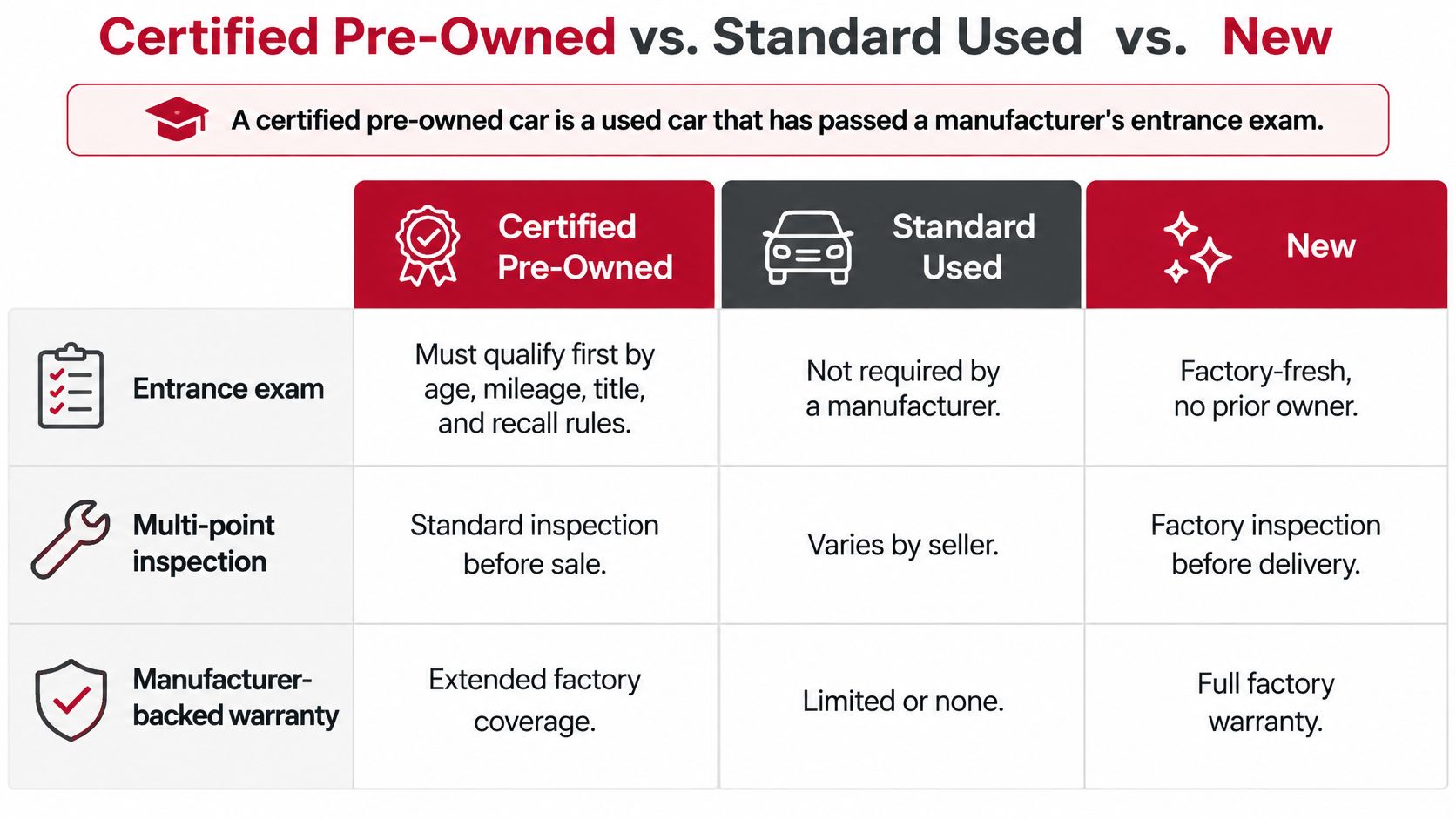
Use the comparison to separate what certification adds from what it cannot promise. The price premium is easier to judge when you check the car’s eligibility, inspection results, and actual warranty terms rather than relying on the badge alone.
Which Vehicles Qualify for Nissan CPO
Eligibility is set by Nissan’s program, not by how polished a car looks on the lot. If it fails a checkpoint, it isn’t a Nissan certified car, no matter what a salesperson calls it.
The first gate is recalls. A National Highway Traffic Safety Administration campaign notice on Nissan’s CPO process states that a vehicle with an outstanding safety recall or service campaign cannot be certified, sold, or delivered as Nissan CPO until that work is completed. Ask for the VIN, then confirm the campaign is closed before you treat the car as certified. That rule covers a certified Nissan Rogue, Sentra, Pathfinder, Kicks, Frontier, Altima, Murano, or Armada.
The remaining gates
Age and mileage come next, and they move. Nissan sets a current age limit and a current mileage cap, and those figures change by model year. Don’t borrow a number from a forum post. Ask the seller to show the cap that applies to this exact car, then match the odometer and the build date against it.
Title history is a hard stop. A clean title, with no salvage, flood, or other brand, is what certification expects. A branded title typically knocks the car out.
Condition is the last mechanical gate. The car has to pass the multi-point inspection, and failed items have to be repaired before anyone can call it certified.
Ownership and service history tell you how the car was kept. The count of prior owners isn’t a single program number you can memorize. Pull it from the history report, and read the maintenance stamps beside it.
| Checkpoint | What to Verify | Why It Matters |
|---|---|---|
| Open safety recall | No outstanding safety recall or service campaign | Blocks certification, sale, or delivery until the work is complete |
| Model year and age | Within Nissan’s current age limit for that car, shown on the program sheet | Sets which model years can be certified |
| Mileage limit | Within Nissan’s current mileage cap, shown on the program sheet | Keeps certified cars near the newer end of the used market |
| Title history | Clean title with no salvage, flood, or branded history | Branded titles typically disqualify a vehicle from certification |
| Condition inspection | Passes the multi-point inspection and any required repairs | A failed inspection means no certification |
| Ownership and service record | Prior-owner count from the history report, plus documented maintenance | Shows how the vehicle was cared for |
Practical rule: Get it in writing that the car is certified under Nissan’s program, and check recall status by VIN before you put money down.
How the Nissan Multi-Point Inspection Works
Picture the inspection as five stages you can follow on paper, not as a sticker on the windshield. The flow below is the path a qualifying Nissan takes before the certified label is real.
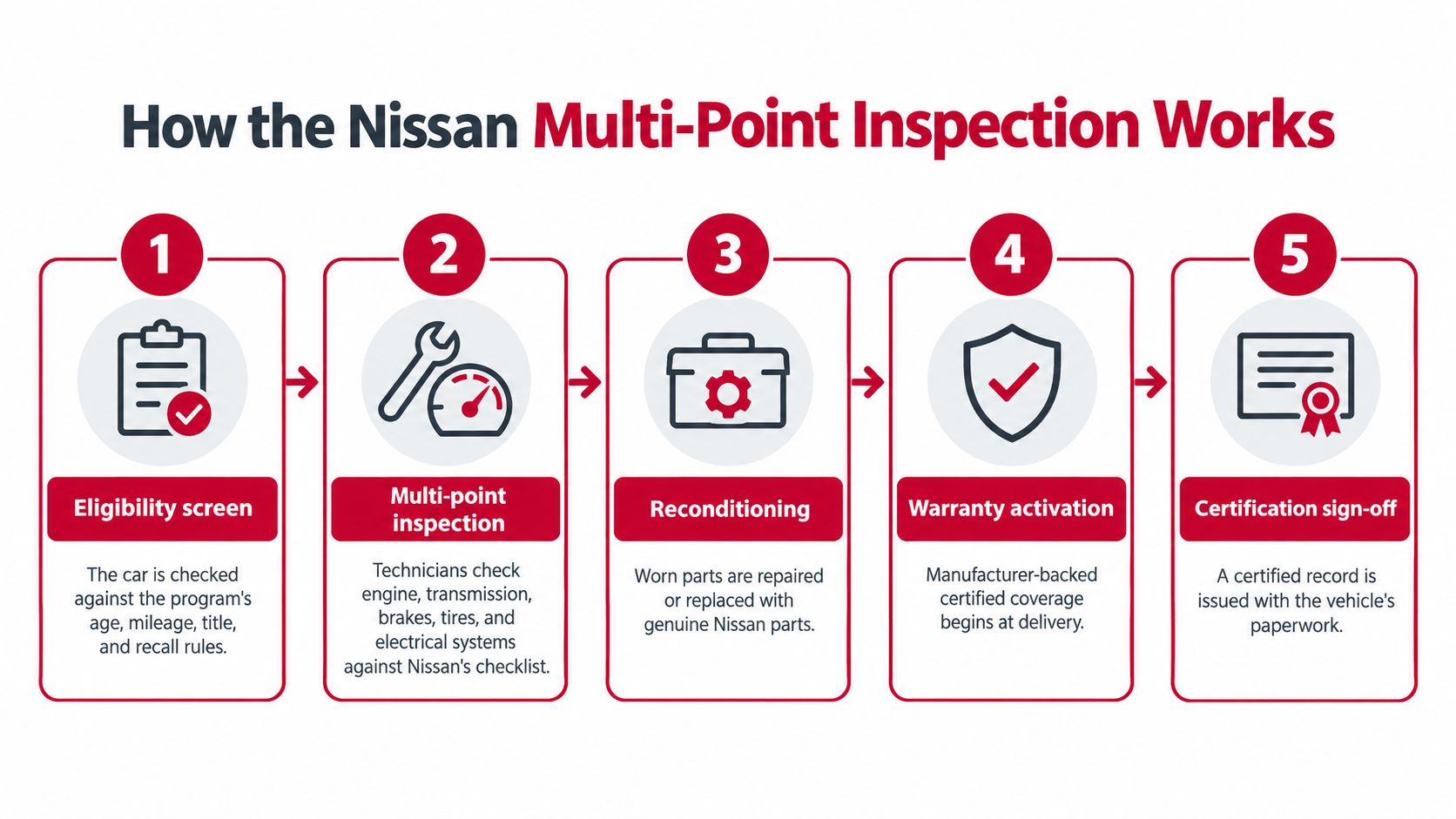
- Eligibility screen. The car is checked against the program’s age, mileage, title, and recall rules. If it misses one, the inspection doesn’t start.
- Multi-point inspection. A technician works a manufacturer-standard checklist that typically covers the engine, transmission, brakes, tires, suspension, electrical systems, climate control, and driver-assistance sensors. Each line is a pass, a fail, or a repair, not a vibe.
- Reconditioning. Items that fail are repaired to program standards, and each repair is written down. You’re buying the record of that work, not only the finished car.
- Road test and documentation. The car is driven, and the completed form stays in the vehicle file. A road test is where a noise, a pull, or a warning light shows up that a parked check can miss.
- Certification and warranty activation. The car is certified, and the manufacturer-backed warranty and roadside assistance begin. Until that sign-off, you have a used Nissan, not a certified one.
A short walk-through of what a buyer should ask to see sits here:
Consumer Reports, in an analysis of reliability and owner-satisfaction data covering more than 300,000 vehicles, found that vehicles purchased as CPO had approximately 14% fewer reported problems than other used vehicles. The screen is selection plus reconditioning. Cars have to meet age, mileage, title, and condition thresholds, then go through a standard inspection and repair process before sale.
That is not a promise of zero failures. A checklist catches what a technician can see that day. Ask for a copy of the completed inspection checklist, not a verbal “it passed.”
What Certification Cannot Promise
A lot of shoppers hear “certified” and picture a flawless car. That belief is the expensive one. Certification lowers some risk. It doesn’t freeze the car in perfect condition.
An inspection list records observable defects at one moment. Later trouble can still come from wear, skipped maintenance, a battery, or electronics that tested fine on sale day. A warranty helps when the failed part is covered in practice. It doesn’t rewind city miles.
The Federal Trade Commission Buyer’s Guide says a vehicle-history report is not a substitute for an independent mechanical inspection, even when the car has been certified, inspected by the dealer, or sold with a warranty. History reports may show accidents, flood damage, title brands, mileage, ownership, and service records. They typically don’t identify mechanical problems.
Gaps mileage won’t show
On a Queens commute, miles understate the beating.
- Tires and brakes: Tread and pad thickness can be legal and still be due within a season.
- Open recalls: A safety recall needs its own VIN check. It isn’t the same job as a repair the warranty might pay.
- Prior repair quality: A replaced panel can look fine and still hide sloppy work.
- Curb and wheel damage: Tight parking leaves bends a history report never lists.
- Stop-and-go, winter salt, and short trips: Those patterns age brakes, batteries, and underbody parts faster than the odometer suggests.
Yes, hire a mechanic you choose for a pre-purchase inspection. Treat the certified checklist as a second opinion, not the only one. You want both papers in the same folder before you sign.
Warranty and Roadside Coverage Worth Checking
A certified warranty is a document you read, not a headline you trust. The FTC guide to buying a used car tells buyers to get the actual warranty and review coverage, exclusions, and who pays for repairs, instead of relying on a spoken summary. It also tells you to confirm whether the car is sold with a warranty or “as is,” and which repair costs the dealer will pay.
Fill this in for the car in front of you
Don’t compare two Nissans on the years printed in an ad. Compare the rows below.
| Coverage Element | What to Confirm | What to Record |
|---|---|---|
| Start date | Whether coverage starts at sale or at the original in-service date | The start date printed on that car’s warranty |
| Term remaining | Months and miles left on the limited warranty | The months and miles still left on that document |
| Covered systems | Powertrain only, or broader coverage that includes electronics and climate control | The named systems listed as covered |
| Exclusions | Wear items and maintenance the owner pays for | Tires, brake friction material, some batteries |
| Deductible | Amount owed per covered repair visit | The dollar amount on the warranty |
| Roadside assistance | Coverage period, tow limits, and services included | The limits printed for that program |
| Transfer to a later owner | Whether coverage passes to a second owner | Yes or no, as the document states |
A manufacturer-backed CPO warranty is not an optional service contract. The contract is a separate product you pay for. Certification doesn’t automatically include it, and neither product covers every future repair.
A longer headline can be worth less than shorter coverage with fewer exclusions. The systems that hurt a budget are the powertrain, climate control, and electronics. Tires, brake friction material, and some batteries usually stay with you.
Ask for the exact terms on that VIN in writing, including deductible and roadside limits, before you compare it with the price.
Is the CPO Price Premium Worth Paying
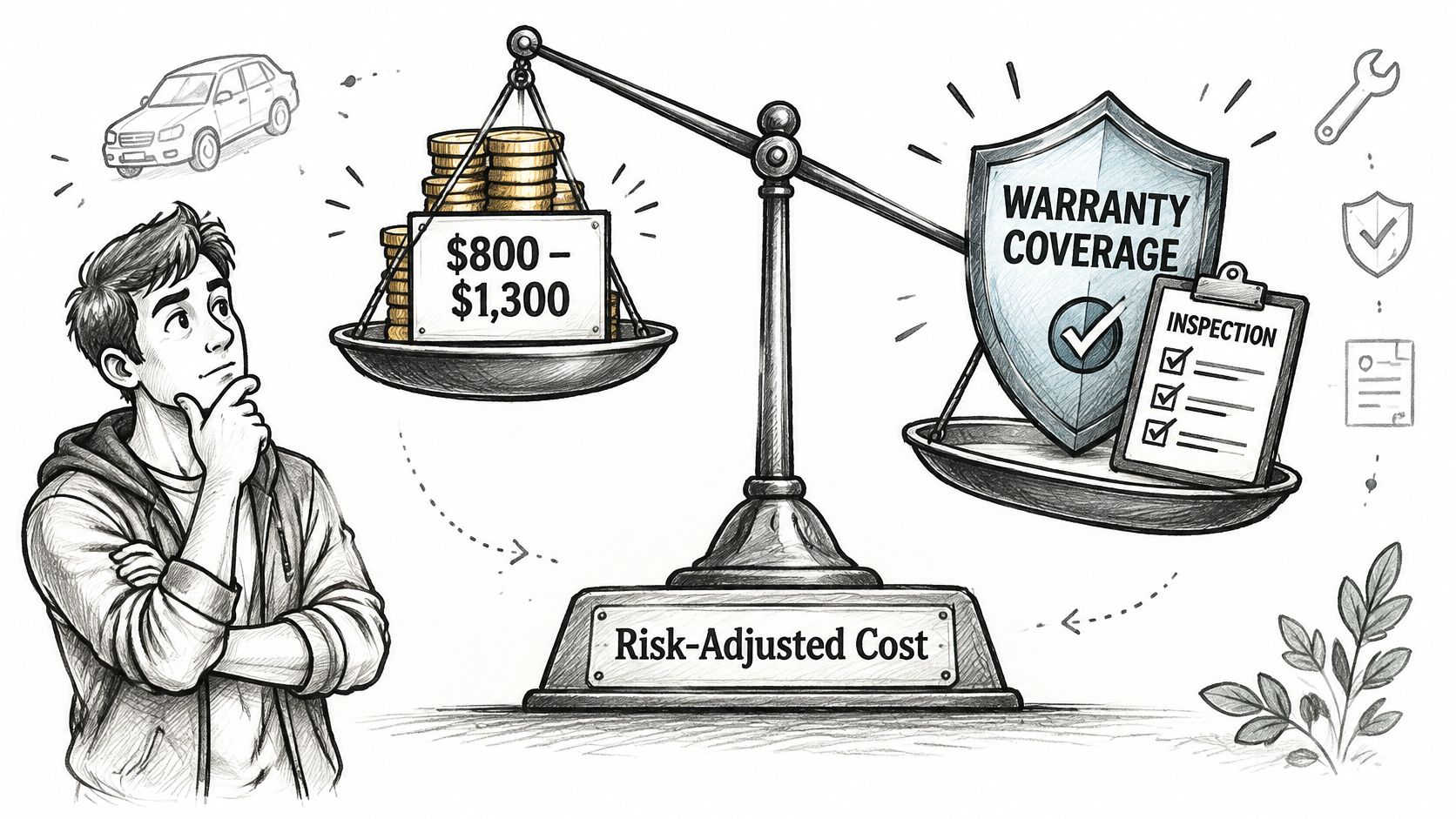
For a Queens shopper comparing two similar cars, the certified one is worth more only if its added protection justifies the higher price. Cars.com reports that factory-certified vehicles commonly cost approximately $800–$1,300 more than comparable non-certified vehicles of the same make and model. Its analysis also says a two- to three-year-old CPO vehicle could retain roughly $2,000 more value through depreciation than a comparable non-certified used vehicle. Those potential benefits matter only if the warranty and repair terms match the car you are buying.
Run the exposure on your ownership window
Add the price premium to the maintenance you expect to pay, any warranty deductibles, and financing costs over the time you plan to own the car. Then compare that total with the repairs the warranty covers in practice. A small premium may make sense if a major covered repair would cost more and meaningful warranty time or mileage remains.
For example, if the certified car costs $1,000 more, a covered repair costs $1,400, and the deductible is $100, the warranty would save $1,300 on that repair. One such visit would offset the premium. If the only work needed during the warranty term is oil, filters, and tires, that protection may not repay the extra cost. Use the specific car’s coverage and price, not an average.
Ask the dealer for written terms for any repair commitment that comes with the certified car. Keep those terms separate from the manufacturer’s warranty, and check what each covers.
A non-certified used car under $20,000 may be the smarter buy if its inspection evidence is strong and you pay for an independent mechanic. The badge alone does not set the budget. The question is whether the price premium is reasonable for the risks the warranty actually covers.
Gas Efficiency Across Nissan CPO Models
Two Nissan vehicles with the same model name can use different amounts of fuel. Gas Efficiency depends on the model year, engine, transmission, and drivetrain. Check the exact configuration on the listing, rather than relying on the badge.
FuelEconomy.gov’s 2024 Nissan ratings show the 2024 Nissan Frontier at 21 mpg combined with two-wheel drive and 20 mpg combined with four-wheel drive. Their highway ratings are 24 and 23 mpg, respectively. The 2024 Nissan Murano is rated 23 mpg combined with either front-wheel drive or all-wheel drive, with 20 mpg city and 28 mpg highway. The 2019 EPA listings rate a 2019 Nissan Altima with a 2.5-liter four-cylinder engine and continuously variable transmission at 32 mpg combined, 28 mpg city, and 39 mpg highway. A four-wheel-drive 2019 Pathfinder is rated 22 mpg combined, 19 mpg city, and 26 mpg highway.
| Model and Drivetrain | Model Year | Combined mpg | City mpg | Highway mpg |
|---|---|---|---|---|
| Nissan Frontier 2WD | 2024 | 21 | Not listed on that 2024 EPA page | 24 |
| Nissan Frontier 4WD | 2024 | 20 | Not listed on that 2024 EPA page | 23 |
| Nissan Murano FWD and AWD | 2024 | 23 | 20 | 28 |
| Nissan Altima 2.5L CVT | 2019 | 32 | 28 | 39 |
| Nissan Pathfinder 4WD | 2019 | 22 | 19 | 26 |
What the gap costs in a year
For a simple comparison, assume 12,000 miles of driving and $3.50 per gallon. At 20 mpg, a Frontier-class truck uses 600 gallons, costing about $2,100. At 32 mpg, an Altima uses 375 gallons, or about $1,313. The difference shows how fuel use can affect ownership costs, but your actual bill depends on your driving and the vehicle’s exact configuration.
Rogue, Sentra, Kicks, and Armada ratings are not included in these listings. For any of those models, check the window sticker or the VIN-specific online listing for its combined, city, and highway ratings before comparing fuel costs.
Buy a Nissan CPO at Heights Nissan
You already know the gates. Buying is the order you run them in, not a second education.
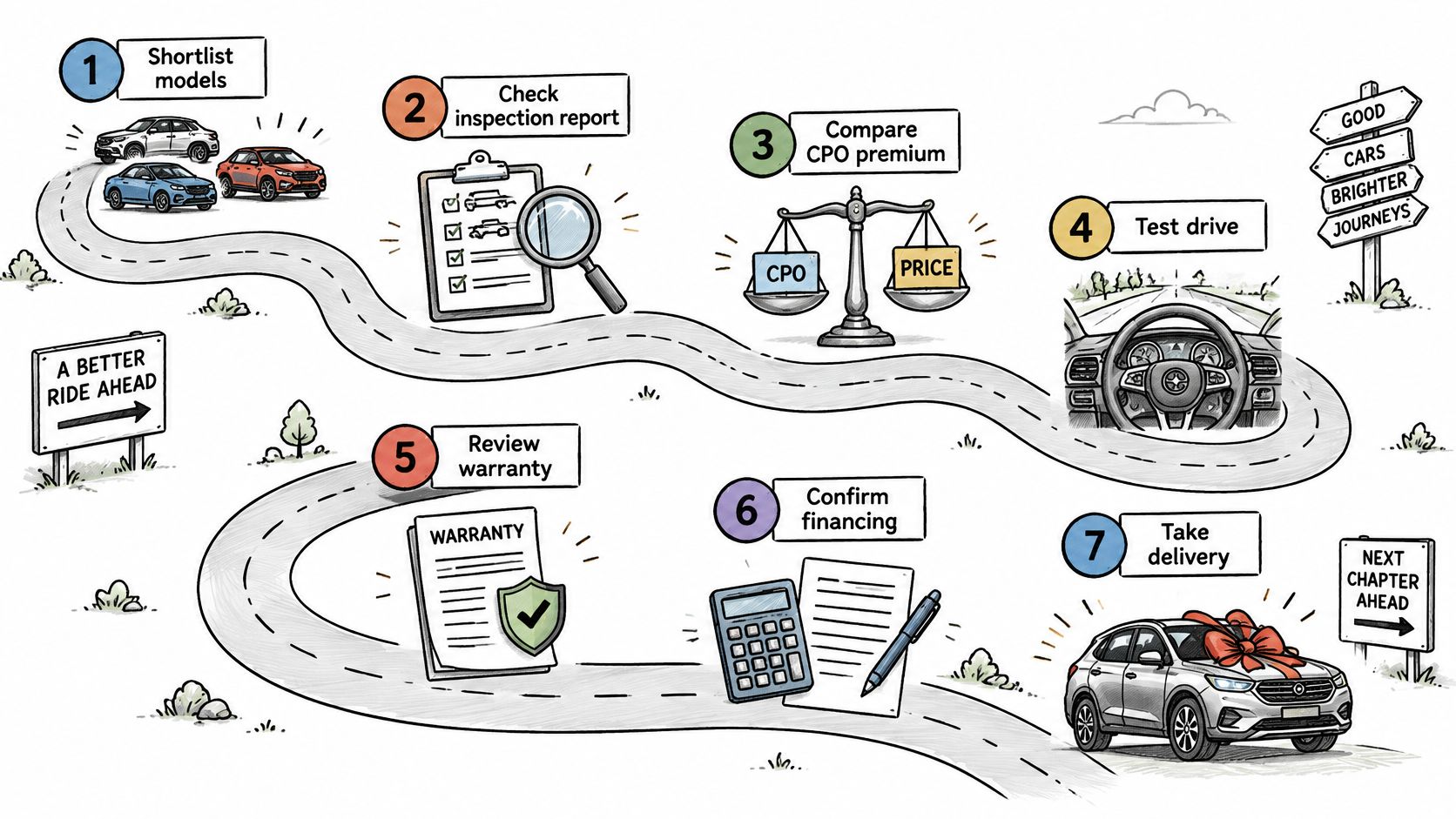
- Shortlist a Rogue, Sentra, Pathfinder, Kicks, Frontier, Altima, Murano, or Armada by how you drive, and compare drivetrain and model year with the fuel table.
- Confirm the car is certified under Nissan’s program, and ask for the completed inspection record.
- Read the warranty with the coverage worksheet, and write down the term, deductible, and roadside limits.
- Check the VIN for open recalls and history, and book an independent pre-purchase inspection if you want one.
- Review financing through the dealership’s online tools, including the payment calculator, and set the payment against your budget.
- Request a trade-in estimate if you’re replacing a car you already own.
- Schedule a test drive with the sales team, then ask the service department how the first maintenance visit is handled.
Heights Nissan is at 74-15 Northern Boulevard in Jackson Heights, New York, and the site lets you review trim details before you go. Leave with a written coverage summary and a booked test drive, and confirm the current age and mileage limits on that car before you sign.
Heights Nissan stocks Nissan Certified Pre-Owned models alongside new Nissans, with inspection records, limited warranty paperwork, and roadside assistance you can read before you buy. If you’re weighing a certified Rogue, Sentra, Pathfinder, or another Nissan against a lower-priced used car, the store’s finance tools and service team can put the premium next to the coverage. Visit Heights Nissan to compare a specific VIN, schedule a test drive, and walk out with the documents in hand.
0 comment(s) so far on Certified Pre-Owned Vehicles: Nissan CPO Guide for 2026